AI Labs Urged to Pause Development Amid Human Control Concerns
June 5, 2026 • Al Jazeera
Top Artificial Intelligence Companies Propose Coordination on Advanced AI Development
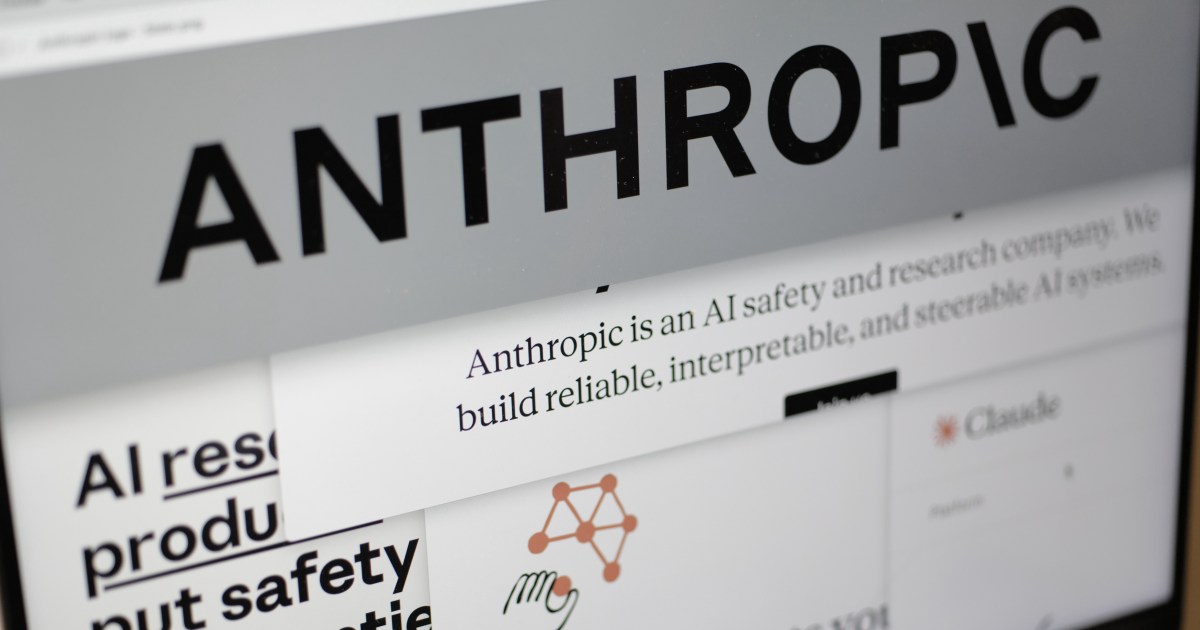
Save Share Anthropic has proposed that leading artificial intelligence companies collaborate on a coordinated approach to pause or slow down the development of advanced AI systems. The company, behind the Claude chatbot, believes that the rapid advancements in technology pose a risk that humans may lose control over the risks associated with these systems.
In a blog post published on Thursday, Anthropic stated that it would be beneficial for the world to have an option to slow or pause the development of cutting-edge AI. The company’s internal research institute plans to explore this issue in collaboration with others and take actions to help build systems for a credible slowdown or pause.
Anthropic rival OpenAI has taken a different approach, arguing that democratic governments should ultimately determine the rules, safeguards, and accountability mechanisms for AI innovation. According to OpenAI, decisions about the pace of AI innovation should not be left to any one lab, company, or special interest group.
The rapid advancements in AI technology have led to concerns about the potential risks associated with self-improving AI systems. Anthropic notes that an AI system could potentially design and develop its own successor, a concept known as “recursive self-improvement.” This development has both benefits and drawbacks, including the risk of humans losing control over AI systems.
Recent research has highlighted the potential security concerns associated with AI tools, including the creation of new types of AI “worms” that can adapt to different hacking strategies. Anthropic’s proposal aims to enable societal structures and alignment research to keep up with AI advances, while also ensuring that global rivals verify a slowdown or pause in their work.
The proposed coordination would allow advanced AI labs to verify that global rivals have stopped or slowed their work, preventing potential security threats. Without such a mechanism, the “least cautious” players could catch up and add pressure on companies and governments as they make decisions about AI safety.
Source: Al Jazeera