Syrias Unity Remains Elusive Amid Ongoing Conflict and Division
January 8, 2026 • Al Jazeera
Here is a rewritten version of the article in a neutral newsroom style:
Recent Leaks Reveal Plans for Insurgency in Syria’s Alawite Region
A series of leaked recordings and documents have shed light on a potential conspiracy to launch an insurgency in Syria’s Alawite-dominated coastal region. The plan, allegedly backed by high-level officials from the former regime of Bashar al-Assad living in exile, involves recruiting fighters within the Alawite community, storing weapons, and transferring payments to their families.
The revelations come months after an insurrection staged in the coastal region in March resulted in over 1,000 deaths, including civilians, government troops, and Alawite fighters. Similar violence erupted again in July in Suwayda, a Druze stronghold in southern Syria, where hundreds of civilians were killed during clashes between Sunni tribes and Druze militias.
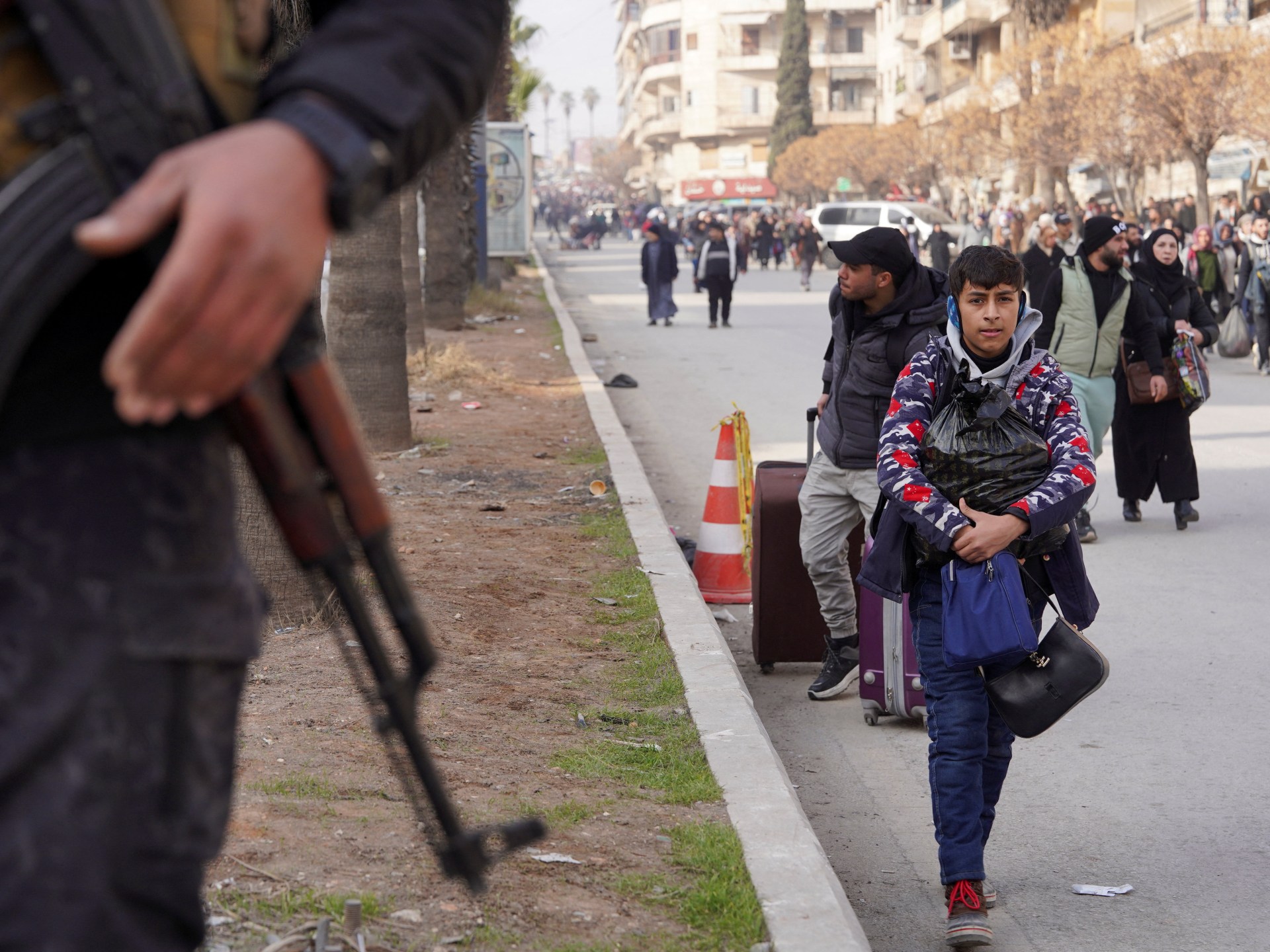
Government forces have struggled to restore order in these regions, with sporadic clashes also reported between the Kurdish-dominated Syrian Democratic Forces (SDF) and government forces. Concerns are growing that minority-dominated regions may be carved out, potentially undermining the establishment of a strong Syrian state or violating its territorial integrity.
While some Alawites may still harbor ambitions for a return to power, economic deprivation and physical insecurity appear to be driving factors behind their actions. The response to calls for protests by Ghazal Ghazal, head of the Islamic Alawite Council in Syria and the Diaspora, has been characterized as reflecting accumulated grievances rather than realistic political projects.
The situation is further complicated by the absence of transitional justice, which may encourage victims of the former regime to seek revenge outside legal frameworks. Many Alawites are now urging the government to publish a clear list of former regime officials responsible for major crimes in order to individualize accountability and lift the burden of collective guilt imposed on their community.
In Suwayda, the local Druze community has categorically refused to allow government forces to enter their territory, with Hikmat al-Hijri, a prominent Druze spiritual leader, emerging as a key figure in the region’s politics. His position has hardened since the March massacres in the coastal region of Syria, and he is now seen as the sole political authority of the Druze community.
Source: Al Jazeera