Swedens far-right party gains significant influence in politics
June 18, 2026 • Al Jazeera
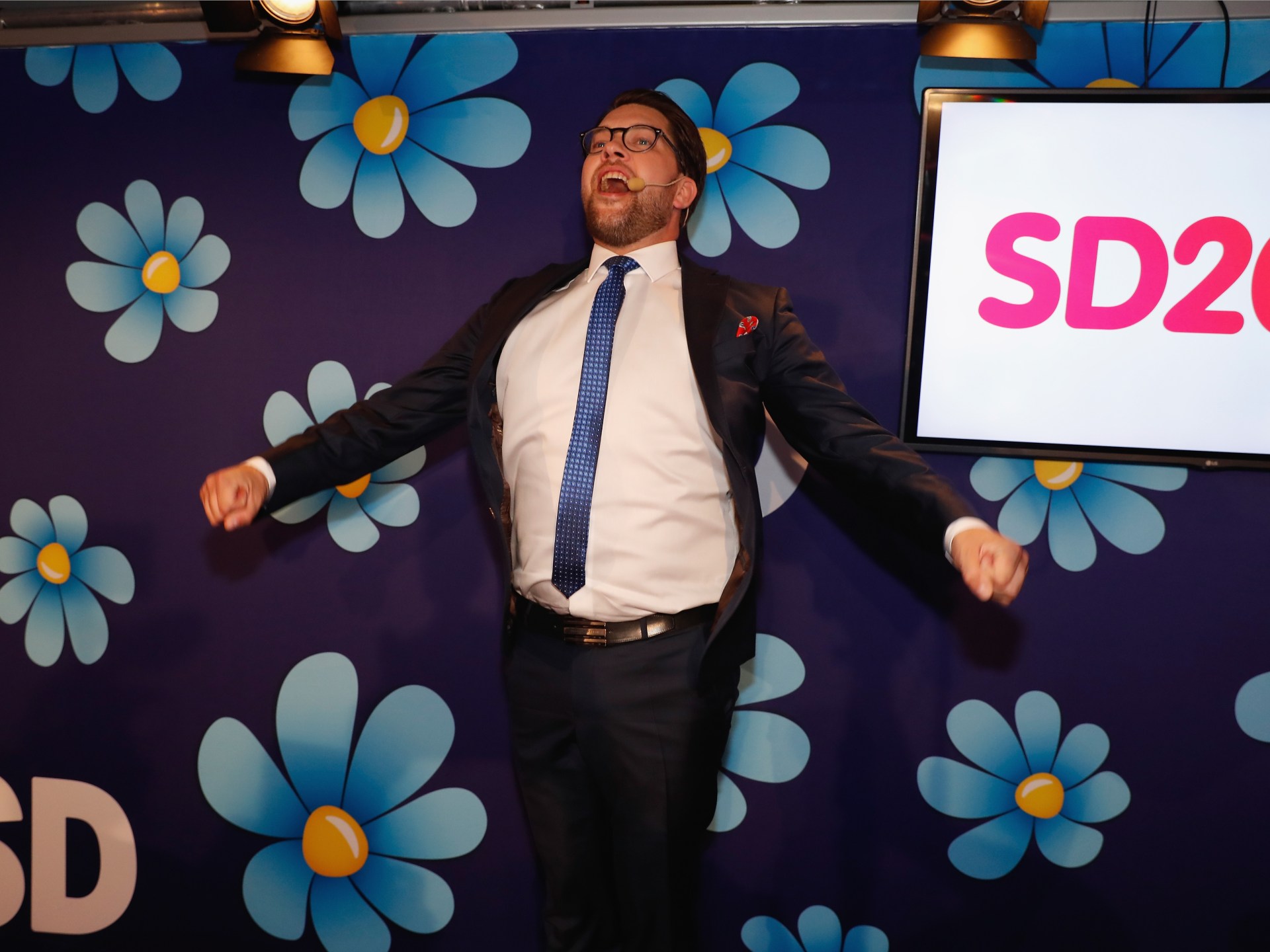
Sweden Democrats Gain Mainstream Acceptance
The Sweden Democrats (SD), a far-right anti-immigration party, have undergone significant changes over the past decade. Founded in the 1980s by individuals with ties to the neo-Nazi movement, SD was initially shunned by major political forces due to its extremist roots.
However, after the 2018 general election, a political deadlock prompted right-wing parties to reevaluate their alliances and principles. As a result, SD has become Sweden’s second-largest party, providing parliamentary support that keeps the current government in power.
SD’s transformation began with efforts to distance itself from its neo-Nazi past. In the 2000s, the party adopted more moderate policies, such as embracing “open Swedishness,” which suggests that Swedish identity is not biologically exclusive and assimilation is possible. The party also rebranded itself as a conservative party, dropping demands for leaving the European Union and opposing NATO membership.
According to researchers, SD has followed a similar path as other European hard-right parties, gradually altering its rhetoric and repackaging itself as borderline far-right. The party’s leadership has expelled extremist elements, discouraged sharing of far-right content, and rebranded its logo from a Viking to an innocent-looking flower.
SD’s rise to prominence was fueled by the 2015 refugee crisis, which saw an estimated 1.3 million asylum seekers arrive in Europe. In Sweden alone, 163,000 arrived, making it the highest annual figure in the country’s history and largest per capita intake in the EU. As a result, immigration became a major issue for Swedish voters, with 53% of voters citing it as their top concern.
In recent years, SD has gained mainstream acceptance, with other parties reaching out to form alliances. In 2019, the Christian Democrats met with SD leader Jimmie Akesson for a symbolic “meatball lunch,” and in 2020, the Moderate Party’s Ulf Kristersson, now Sweden’s prime minister, met with Akesson for a traditional Swedish coffee break.
These gestures have marked a significant shift in the party’s perception, from being seen as a pariah to being welcomed into the political mainstream.
Source: Al Jazeera